Home of Roswell Invaders Baseball Team! Roswell Invaders Professional Baseball Team
2011 Roswell Invaders Season Recap - The Original Invaders Become the First Champions of the Pecos League
Every successful franchise eventually develops a culture. For the Roswell Invaders, that culture began immediately. It began before the first official Pecos League regular-season game was ever played, in El Paso, Texas, when a collection of players wearing outrageous lime green uniforms walked into Cohen Stadium and defeated an established American Association team.
It continued through the first regular-season game in Pecos League history in Ruidoso. It survived the strange ballparks, high winds, darkness, long road trips, roster changes and wild confrontations that defined the league's inaugural season. It survived heated games against White Sands and a confrontation between Roswell and Las Cruces that became so chaotic that Pecos League owner Andrew Dunn went onto the field carrying a chair while trying to settle things down.
It survived an extremely difficult playoff series against Alpine. And finally, at Joe Bauman Stadium, the Invaders defeated the Ruidoso Osos to become the first champions in Pecos League history.
The 2011 Roswell Invaders weren't simply the first championship team in franchise history. They established what Roswell Invaders baseball was supposed to be: winning, aggressive, colorful, unpredictable and never boring.
Nothing about the Invaders was guaranteed when the franchise was created. The Pecos League itself was new. The league was founded in 2010 with plans to begin play in 2011, and Roswell joined Alpine, White Sands, Las Cruces, Ruidoso and Carlsbad as the original six clubs.
Andrew Dunn, the founder of the Pecos League, had previously operated the Las Cruces Vaqueros in the Continental Baseball League and wanted to establish another professional team in New Mexico. Roswell became that team.
Support from the Roswell Economic Development Corporation, particularly Bob Donnell and Jessica Chaves, was instrumental in helping get the Invaders established. But skepticism remained throughout the community. Would the team actually show up? Would professional players really come to Roswell? Would the Pecos League actually play its schedule? Would fans support it?
The Roswell Invaders were the 2nd team owned by Pecos League Owner/Founder Andrew Dunn.
Dunn at the time was the owner of the Las Cruces Vaqueros in the Continental League and was considering having a 2nd team.
The Invaders were born along with Alpine Cowboys, White Sands Pupfish, Las Cruces Vaqueros, Ruidoso Osos and Carlsbad Bats the Pecos League was started in 2011 with six teams.
He received recommendation from Las Cruces Newspaper writer Teddy Feinberg that Roswell had been trying to lure an independent professional team for years.
Feinberg had worked in Roswell and there had been another organization who tried to start a league there in 2005 that failed.
This organization had sold stock shares of a team to many businesses in the community and wound up never playing.
Because of this there was major skepticism as to whether the Invaders would be real and what league they would actually play in.
Many of the key businesses in town including the UFO Museum were investors and wanted nothing to do with the Invaders.
The Director of the UFO Museum later Julie Shuster stated in 2012 "We were conned by Lolli Zamora's team and invested money with them and gave them office space.
The Whole deal was a conn. I apologize to the Invaders for how we originally treated them. But you have to look it from our prosepctive.
Now that we realize the Pecos League and Invaders are a real organization we will give them our full support."
In 2011, The Invaders were finally launched with the main supporter being Roswell Economic Development Corporation (Bob Donnell and Jessica Chaves).
The support and Bob and Jessica was instrumental to the formation and existance of the Invaders.
"People want baseball here, however they have been burned by the previous attempt to land a team." said Andrew Dunn
The fortunes of the team immediately turned around when the team reported to Spring Training and defeated the El Paso Diablos in their first exhibition game.
People actually saw players, baseballs, bats, helmets and a real baseball team with good players.
In May 2011 when the Invaders reported for the first Spring Training, The condition of Joe Bauman was also terrible.
The City Parks and Recreation Department lead by Kim Elliott had little belief that the Invaders would really happen.
The field conditions showed with mini hills in the outfield and a terrible infield playing condition.
But by midseason the field was in great shape. Andrew Dunn of Pecos League "Looking back at the history of the Invaders, no one and I mean no believed there would be a team show up.
The previous league really hurt the market and it took the Invaders a complete season of playing to get the belief.
The team has turned out to be great for the Pecos League, fans and 100's of players but it was by far the toughest team to get off the ground in league history.
It will forever be a Pecos League Team and the fans and city have proven great support."
The condition of Joe Bauman Stadium reflected some of that uncertainty. When the Invaders arrived for Spring Training, the field needed considerable work.
The mound needed repair. The outfield needed water. There were uneven areas throughout the playing surface.
Even people within the city were uncertain whether this new professional baseball operation would actually work.
Then the players arrived. They had uniforms, bats, gloves and baseballs. Most importantly, they could play.
Chris Paterson Takes Control of the First Invaders
The responsibility for managing the first team in Roswell Invaders history belonged to Chris Paterson. Paterson was doing much more than managing a normal professional baseball club. There was no previous Invaders team to copy. There was no established Pecos League playbook. There were no previous league champions to study. Everything was being created for the first time.
Paterson had to build a roster capable of surviving the realities of a new independent league while simultaneously establishing expectations for every Roswell team that would follow. He succeeded.
Years later, when the Pecos League ranked the greatest teams in league history, the 2011 Invaders were ranked third overall. The league specifically credited Paterson with pulling together a roster that went through numerous pitching changes and transactions and turning it into the inaugural Pecos League champion.
May 4, 2011 - The Invaders Walk Into Cohen Stadium
Before Roswell could play its first Pecos League regular-season game, the Invaders had a much bigger test: the El Paso Diablos.
El Paso played in the American Association. The Diablos were an established independent professional baseball organization playing at Cohen Stadium. Roswell was a brand-new team from a brand-new league that had never played a game.
The matchup looked like exactly what it was supposed to be: an established professional club getting a Spring Training game against a new lower-level independent team.
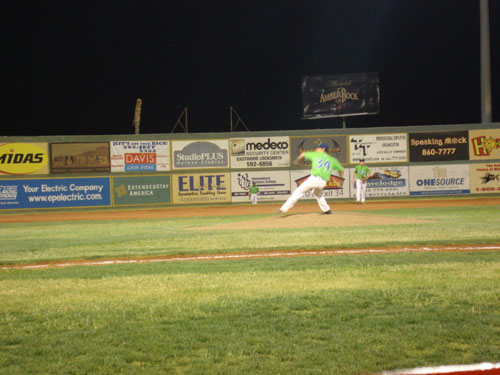
The Invaders showed up wearing lime green. El Paso fans laughed at the uniforms. Then the game started, and they weren't laughing for long.
Clifton Thomas Becomes the First Roswell Hitter
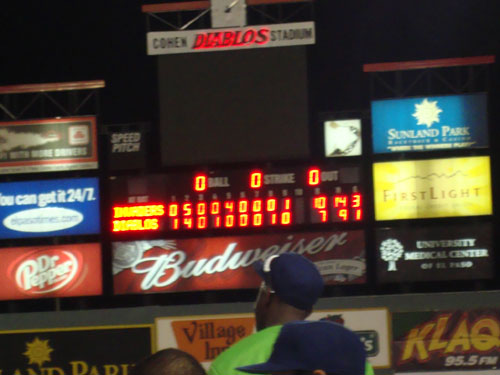
Clifton Thomas stepped into the batter's box as the first hitter in Roswell Invaders history. Nick Shoup became the first pitcher. The Invaders scored five runs in the second inning and stunned El Paso.
Adrian Martinez handled the catching duties throughout the game. Troy Frazier collected two hits. Brian Ramirez delivered a major bases-loaded double. Roswell kept battling through every at-bat.
As the innings passed, something became increasingly uncomfortable for the home team. The new team from Roswell was winning.
The Diablos Wanted Another Inning
The Spring Training setting made the ending even stranger. Roswell had already demonstrated it could play with El Paso, but the game continued into an extra inning, giving the Diablos another opportunity to change the result.
Brent Burger pitched the tenth for Roswell. It didn't matter. The Invaders still won.
Roswell 10, El Paso 7.
The first game in Roswell Invaders history was a victory over a team from the American Association. The first game involving a Pecos League club was a Pecos League victory.
It instantly changed the perception of the new team. People could laugh at the lime green uniforms. They could question the new league. They could wonder whether Roswell belonged on the same field with an established independent club. But the scoreboard at Cohen Stadium said 10-7.
The First Regular-Season Game in Pecos League History
Six days later came another first. On May 10, 2011, Roswell traveled into the mountains to face the Ruidoso Osos. This was the first regular-season game in Pecos League history.
If the El Paso game had demonstrated that the new league could compete, the Ruidoso game demonstrated exactly how unusual Pecos League baseball could become. The game was played at approximately 7,000 feet of elevation. The infield was described as being as hard as cement. A powerful wind was blowing toward center field.
Roswell wore lime green pants and navy jerseys. Ruidoso wore brown jerseys and cream pants. Then everybody started hitting.
Ruidoso won 18-13. Thirty-one runs were scored in the first regular-season game in league history.
Ruidoso would continue producing some of the strangest baseball Roswell experienced all summer. On June 18, the Invaders and Osos played another remarkable game.
This one reached 17-17 before darkness took over and the game had to be suspended. It was supposed to resume August 1, but rain prevented that. Eventually the game was completed in August, roughly a month and a half after it began.
Ruidoso finally won 18-17 in 12 innings. Clifton Thomas went 4-for-7. Drew Peterson went 6-for-8 for Ruidoso. Case Rigby went 6-for-7. Both clubs used 19 players.
The league even changed its designated-hitter rule during the period between the beginning and conclusion of the game.
That was the 2011 Pecos League. Sometimes even the rules changed before a game could finish.
Roswell and White Sands Develop an Immediate Rivalry
The Invaders quickly developed a heated rivalry with the White Sands Pupfish. Roswell represented Chaves County. White Sands played in Alamogordo. The teams saw each other constantly, and familiarity did not create friendship.
Games between the Invaders and Pupfish became intense. Arguments escalated. Tempers flared. There were wild confrontations and fights as the rivalry developed.
But Roswell kept winning important games. On June 3, the Invaders went to Griggs Park and defeated White Sands 16-7. Trivon Howard went 3-for-6 and Josh Grady earned the victory after working six innings.
On June 15, Roswell beat White Sands 7-6 at Joe Bauman. The next night, Josh Grady led the Invaders to an 8-0 shutout. On June 30, Roswell went back to Alamogordo and won 11-9, with Clifton Thomas leading the offense.
The games were rarely quiet. The rivalry was real almost immediately.
White Sands wasn't the only opponent capable of turning a baseball game into something more confrontational. The Las Cruces Vaqueros were another original Pecos League team.
That rivalry carried an unusual complication. Pecos League founder Andrew Dunn had operated the Vaqueros before the formation of the Pecos League and was also responsible for establishing the Roswell Invaders.
But once the game started, none of those organizational connections mattered to the players. Roswell and Las Cruces could become extremely heated.
One confrontation became particularly memorable. A fight erupted between the Invaders and Vaqueros. Players were on the field. Tempers were out of control. Dunn went onto the field himself trying to settle the confrontation.
And in a scene that could probably only have happened during the inaugural Pecos League season, he went out there with a chair.
It became part of the folklore of the first Invaders team. The early Pecos League wasn't polished. It wasn't corporate. It wasn't predictable.
But nobody could accuse it of lacking personality.
The Lime Green Uniforms Become Roswell
The uniforms that El Paso fans had mocked became one of the defining features of the franchise. Lime green was impossible to ignore. That was exactly the point.
The Roswell Invaders weren't supposed to look like every other professional baseball team. The alien identity belonged to Roswell, and the lime green belonged to the Invaders.
Over time, the uniforms became so closely associated with the team's successful first season that fans would later demand their return when the club moved away from them. The original 2011 look became part of the team's identity because it became associated with winning.
Clifton Thomas Becomes the First Pecos League MVP
At the center of the offense was Clifton Thomas. Thomas had been the first hitter in Roswell Invaders history. By the end of the summer, he had become the league's Most Valuable Player.
Thomas gave Roswell exactly the kind of dynamic player needed in the league's early ballparks. Speed mattered enormously. Putting pressure on defenses mattered. Creating runs without waiting for a home run mattered.
Thomas became the centerpiece of that style. Years later, when the Pecos League ranked the 2011 Invaders among the greatest teams in league history, it specifically highlighted the speed Roswell possessed with Thomas and Trivon Howard.
Josh Cakebread Becomes One of the League's Best Hitters
Australian Josh Cakebread became another defining player on the first Invaders roster. Cakebread hit .377 and consistently gave Paterson quality at-bats, becoming one of the best hitters in the league.
On June 24 against Alpine, Cakebread went 4-for-4 as Roswell defeated the Cowboys 10-8. His production helped give Roswell something opponents struggled to contain.
The Invaders weren't built around one hitter. They had several.
Brian Ramirez was another one of the best hitters on the inaugural roster. His importance was apparent from the first exhibition game, when his bases-loaded double helped Roswell defeat El Paso.
But his biggest contribution would come months later in the playoffs against Alpine, with the Invaders' season hanging in the balance.
Ramirez would deliver the swing that helped save Roswell's championship run.
Adrian Martinez Gives Roswell Another Dangerous Bat
Adrian Martinez was also a major part of the lineup. He caught the entire inaugural game against El Paso and immediately became one of the offensive players Paterson could rely upon.
The Pecos League's later historical ranking specifically identified Cakebread, Ramirez and Martinez as three of the league's best hitters. Add Thomas and Howard to that group and it becomes easy to understand why Roswell was so difficult to contain.
There was hitting. There was speed. There was aggressiveness. And there was depth.
Josh Grady and Reed Brown Lead the Pitching Staff
The Invaders also had enough pitching to survive the league's offensive environment. Josh Grady went 7-2. Reed Brown also went 7-2.
Grady delivered several important performances, including the 8-0 shutout victory over White Sands in June. Brown had already demonstrated his value by closing Roswell's first victory against the El Paso Diablos.
The Pecos League's retrospective noted that Roswell went through a large number of pitchers and transactions during the season. That made Paterson's job more difficult. He had to continually adjust the roster while keeping the Invaders at the top of the standings.
Perhaps the most important success of the inaugural season wasn't measured in wins. It was measured in people.
Roswell fans embraced the Invaders. The team averaged roughly 330 fans per night during one stretch of the summer. One midseason crowd reached approximately 764 people.
Joe Bauman Stadium could comfortably seat around 400 at the time, forcing fans down both sidelines. There was an organ player. There was cold beer. There were lime green uniforms. And there was a winning baseball team.
The Invaders ultimately led the Pecos League in attendance. That achievement was enormously important.
Before the season, people had questioned whether the team would even show up. By the middle of the summer, Joe Bauman was overflowing.
By the end of the regular season, Roswell had established itself as the team to beat. The Invaders finished first. White Sands finished behind them. Ruidoso was dangerous. Alpine had perhaps the league's most explosive offense. Las Cruces remained competitive.
But Roswell had survived everything the first Pecos League season could throw at it.
The current Pecos League historical record lists the inaugural Invaders at 47-27. More important than the precise archived accounting of games was where Roswell finished.
First place.
The Invaders had earned home-field advantage for the playoffs.
If Roswell was the league's best overall team, Alpine may have been its most dangerous offensive team. The Cowboys lineup included Nacho Ochoa, Andrew Riddick, Austin Newell, Kyle Wells and Javier Arrieta.
The Pecos League would later rank the 2011 Cowboys as the fourth-greatest team in league history. That meant the inaugural postseason immediately produced a matchup between two teams that would later be recognized among the best of the league's early era.
Game 1 wasn't close. Roswell won 19-4. The Invaders appeared to have complete control of the series.
Then Alpine responded. The Cowboys won Game 2, 6-5.
Everything came down to Game 3.
Alpine Nearly Ends Roswell's Season
The deciding game became one of the defining games of the inaugural Pecos League season. Alpine had Roswell in trouble. The Cowboys were close to eliminating the regular-season champions.
Then Brian Ramirez changed the season.
Ramirez hit the home run that swung the game back toward Roswell. The Pecos League's later historical review described it as a fluke home run in the eighth inning that ultimately won the series for the Invaders.
Roswell survived. The game went ten innings.
The final score was Roswell 11, Alpine 9.
The Invaders won the series two games to one. They were going to the first Pecos League Championship Series.
Roswell's opponent was the Ruidoso Osos. That was fitting.
Ruidoso had been Roswell's opponent in the first regular-season game in Pecos League history. The two teams had already played the bizarre suspended game that took roughly a month and a half to complete. They knew each other well.
Now they would determine the league's first champion.
Game 1 went to Ruidoso, 5-3. For the first time all postseason, the Invaders were one loss away from elimination.
Paterson's team had to win two straight games.
It did.
Game 2 - Roswell Responds
The Invaders came back the following night and took control. Roswell defeated Ruidoso 7-1.
The championship series was tied. One game remained.
The entire inaugural Pecos League season had come down to one night at Joe Bauman Stadium.
Roswell or Ruidoso.
One team would forever be listed first in the Pecos League record book.
August 18, 2011 - Roswell Becomes Champion
The Invaders finished the job. Roswell defeated Ruidoso 4-2.
The series belonged to the Invaders. The championship belonged to Roswell.
The first season in Pecos League history ended with the lime green Invaders celebrating at Joe Bauman Stadium.
Manager: Chris Paterson Regular-Season Finish: First Place Current Pecos League Historical Record: 47-27 League MVP: Clifton Thomas Josh Cakebread: .377 batting average Josh Grady: 7-2 Reed Brown: 7-2 Attendance: First in the Pecos League
Spring Training: Roswell 10, El Paso Diablos 7
First Round Game 1: Roswell 19, Alpine 4 First Round Game 2: Alpine 6, Roswell 5 First Round Game 3: Roswell 11, Alpine 9 - 10 innings Series: Roswell wins 2-1
Championship Game 1: Ruidoso 5, Roswell 3 Championship Game 2: Roswell 7, Ruidoso 1 Championship Game 3: Roswell 4, Ruidoso 2 Series: Roswell wins 2-1
Chris Paterson deserves a permanent place in Roswell Invaders history because he established the standard every future manager inherited.
The first Invaders team wasn't operating with years of organizational experience behind it. Paterson couldn't ask what the 2010 Invaders had done successfully because there were no 2010 Invaders. He couldn't look back at previous Pecos League champions because there weren't any.
He had to figure it out as the season unfolded. The roster changed. Pitchers came and went. Games became confrontational. Some facilities were difficult. Travel was challenging. Games were suspended by darkness. The league itself was learning how to operate while the teams were playing.
Through all of it, Paterson kept Roswell winning. When the regular season ended, the Invaders were first. When the playoffs ended, they were champions.
The Culture of Winning Begins
The significance of the 2011 championship became much clearer as the years passed. Roswell would win again in 2013, again in 2015 and again in 2022.
Future managers would inherit a franchise where reaching the playoffs was expected and championships were realistic goals. That expectation did not exist before 2011.
Paterson and the inaugural roster created it. Clifton Thomas helped create it. Josh Cakebread helped create it. Trivon Howard helped create it. Brian Ramirez helped create it. Adrian Martinez helped create it. Josh Grady helped create it. Reed Brown helped create it.
The players who wore those original lime green uniforms established what future Roswell players would be measured against.
The Invaders Became the Team Everyone Wanted to Beat
That may have been the most important legacy of the inaugural season. Roswell immediately became the team opponents wanted to knock off.
White Sands wanted to beat Roswell. Las Cruces wanted to beat Roswell. Alpine wanted to beat Roswell. Ruidoso wanted to beat Roswell.
The games became heated because they mattered. The rivalries became intense because Roswell was winning.
And the Invaders embraced that identity. They weren't trying to be everybody's favorite opponent. They were trying to win the league.
From Nobody Believing to Everybody Watching
The transformation during that first summer was remarkable. When the Invaders arrived in May, there were legitimate questions about whether the operation would work at all.
Joe Bauman Stadium needed work. The community had reasons to be skeptical after previous attempts at professional baseball. The Pecos League had never played a season. Nobody knew exactly what to expect.
Then Roswell beat El Paso. Then the regular season began. Then fans started coming. Then more fans started coming. Joe Bauman began filling up.
The lime green uniforms became recognizable around town. The Invaders led the league in attendance. And finally they won the championship.
By August, nobody was asking whether the Roswell Invaders were real anymore.
They were the best team in the league.
The Wildest Championship Season
No future Roswell championship could ever duplicate 2011 because no future season could be the first.
Only the inaugural Invaders could say they defeated an established American Association club before the Pecos League had played an official regular-season game. Only they could play in the first regular-season Pecos League game. Only they could experience a league in which games might be suspended by darkness and finally completed weeks later after the rules had changed.
Only they could establish rivalries from nothing. Only they could turn lime green from something opposing fans mocked into the defining color of a championship franchise.
The fights, arguments and confrontations became part of the mythology of that first season. So did Andrew Dunn walking onto the field carrying a chair while trying to settle down the chaos between Roswell and Las Cruces.
It was raw independent baseball. Sometimes too raw. But the games mattered to the players. The rivalries mattered. And winning mattered most.
The First Champions
Every Pecos League championship team that followed would have its own story. But there could only be one first champion.
That belongs permanently to Roswell.
The Invaders began their existence by walking into Cohen Stadium and beating the El Paso Diablos 10-7. They survived the first Pecos League season. They finished first. They survived Alpine in three games. They lost the opening game of the championship series and then beat Ruidoso twice in a row.
And on August 18, 2011, they became champions.
Chris Paterson had taken a brand-new team in a brand-new league and established a culture that would define the Roswell Invaders for years.
The franchise would experience great seasons and terrible seasons. Managers would come and go. Hundreds of players would wear the uniform. More championships would follow.
But everything traces back to this team.
Chris Paterson's 2011 Roswell Invaders.
The lime green uniforms.
The fights.
The rivalries.
The packed nights at Joe Bauman Stadium.
The first-place finish.
The playoff battles with Alpine and Ruidoso.
And ultimately:
The first Pecos League Championship.
Before Roswell could become one of the most successful franchises in Pecos League history, somebody had to establish what being a Roswell Invader meant.

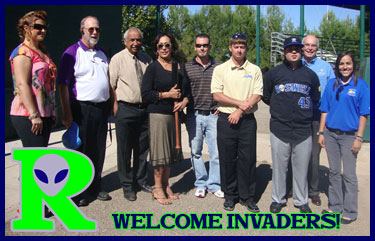 In 2011, The Invaders were finally launched with the main supporter being Roswell Economic Development Corporation (Bob Donnell and Jessica Chaves).
The support and Bob and Jessica was instrumental to the formation and existance of the Invaders.
"People want baseball here, however they have been burned by the previous attempt to land a team." said Andrew Dunn
The fortunes of the team immediately turned around when the team reported to Spring Training and defeated the El Paso Diablos in their first exhibition game.
People actually saw players, baseballs, bats, helmets and a real baseball team with good players.
In May 2011 when the Invaders reported for the first Spring Training, The condition of Joe Bauman was also terrible.
The City Parks and Recreation Department lead by Kim Elliott had little belief that the Invaders would really happen.
The field conditions showed with mini hills in the outfield and a terrible infield playing condition.
But by midseason the field was in great shape. Andrew Dunn of Pecos League "Looking back at the history of the Invaders, no one and I mean no believed there would be a team show up.
The previous league really hurt the market and it took the Invaders a complete season of playing to get the belief.
The team has turned out to be great for the Pecos League, fans and 100's of players but it was by far the toughest team to get off the ground in league history.
It will forever be a Pecos League Team and the fans and city have proven great support."
In 2011, The Invaders were finally launched with the main supporter being Roswell Economic Development Corporation (Bob Donnell and Jessica Chaves).
The support and Bob and Jessica was instrumental to the formation and existance of the Invaders.
"People want baseball here, however they have been burned by the previous attempt to land a team." said Andrew Dunn
The fortunes of the team immediately turned around when the team reported to Spring Training and defeated the El Paso Diablos in their first exhibition game.
People actually saw players, baseballs, bats, helmets and a real baseball team with good players.
In May 2011 when the Invaders reported for the first Spring Training, The condition of Joe Bauman was also terrible.
The City Parks and Recreation Department lead by Kim Elliott had little belief that the Invaders would really happen.
The field conditions showed with mini hills in the outfield and a terrible infield playing condition.
But by midseason the field was in great shape. Andrew Dunn of Pecos League "Looking back at the history of the Invaders, no one and I mean no believed there would be a team show up.
The previous league really hurt the market and it took the Invaders a complete season of playing to get the belief.
The team has turned out to be great for the Pecos League, fans and 100's of players but it was by far the toughest team to get off the ground in league history.
It will forever be a Pecos League Team and the fans and city have proven great support."